


Modals
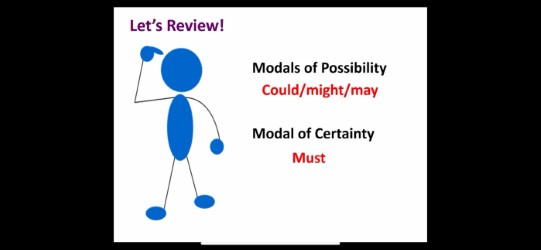
can, could, may, might, should, had better, must, will, would
Phrasal Modals
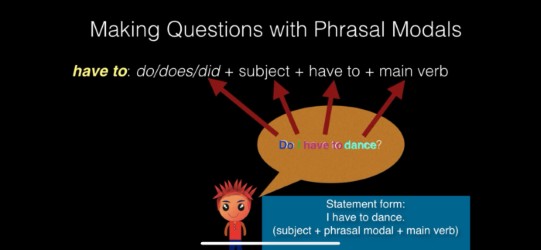
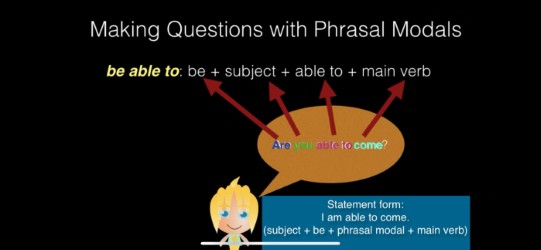
have to, have go to, ought to, be able to
Phrasal modal changes depending on the subject.
Rule #1
Modals DO NOT change.
Rule #2
| subject | modal / phrasal modal | main verb(Keep original verb form!) |
-s -ing -ed
Review
Modals are helping verbs.
Use original verbs with modals.
Ability in the P resent and Future
| present | subject | can (not) | main verb |
| past | subject | could (not) | main verb |
Present and future
| I | am (not) able to | main verb |
| You, We, They | are (not) able to | main verb |
| He/She/It | is (not) able to | main verb |
Past
| I/ He/ She/ It | was (not) able to | main verb |
| You, We, They | were (not) able to | main verb |

can’t and couldn’t
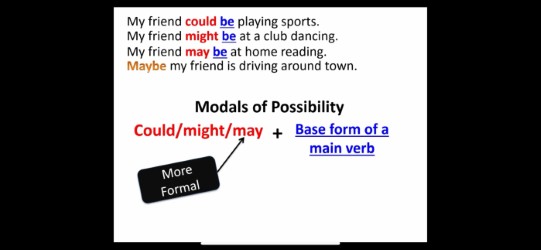
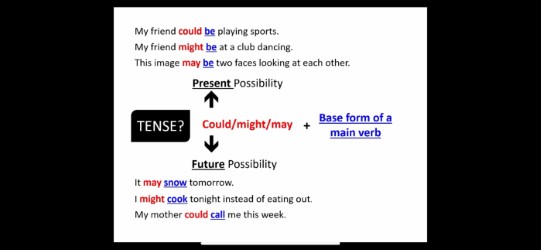
These modal verbs express impossibility or disbelief in the present.
My mom can’t be at the door.She’s traveling to another country. It’s imposible!
For impossibility and disbelief , can’t and couldn’t have the same meaning.
It can’t be my neighbor , or it couldn’t be my neighbor . He’s at work right now.
Can’t and couldn’t show that someone is not 100% certian.
I can’t see who it is, so I don’t know for sure. however, I’m almost certain it isn’t my mom or my neighbor.
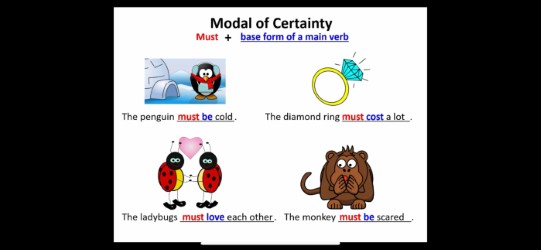
Like other modal verbs , can’t and couldn’t will come before the simple form of the main verb . With this use , the main verb is almost always be.
It can’t be my new phone in this box. The box is much too big.
 ❄🌸Snow Cherry Blossom🌸❄
You must be logged in to post a comment.